
FX Collar
Summary
An FX collar involves buying a cap and selling a floor on the same currencies with the same expiration date. The two options set the upper and lower strike prices.
What is an FX collar?
An FX collar involves buying a cap and selling a floor on the same currencies with the same expiration date. The two options set the upper and lower strike prices.
Objective
It allows the holder to manage foreign exchange risk and minimise the cost of the hedging.
How does it work?
A UK firm of exporters will be receiving $10M in a year’s time. They want to enter into a hedging contract to protect the conversion rate and buy a dollar put/sterling call option. However, they do not want to pay a premium so they offset that by selling a dollar call/sterling put option with an equal premium. The dollar put option limits the risk of dollar depreciation, while the dollar call option restricts any benefit from any dollar appreciation.
Advantages
The holder pays no upfront premium
Offers protection against unfavourable currency moves
The holder can benefit from rates between the cap and the floor
Disadvantages
Limits the holder’s ability to benefit from currency appreciation
Using a forward contract could offer a better rate
Termination could incur extra costs depending on the market rate at that time
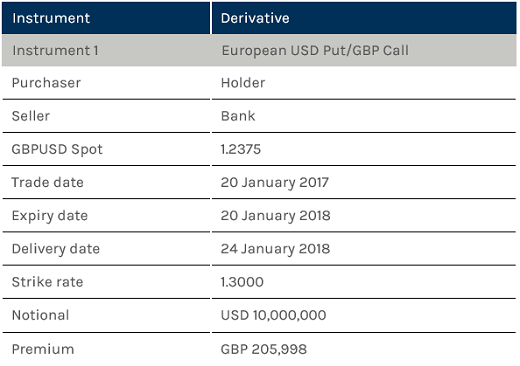
An example of what an interest rate collar trade could look like.
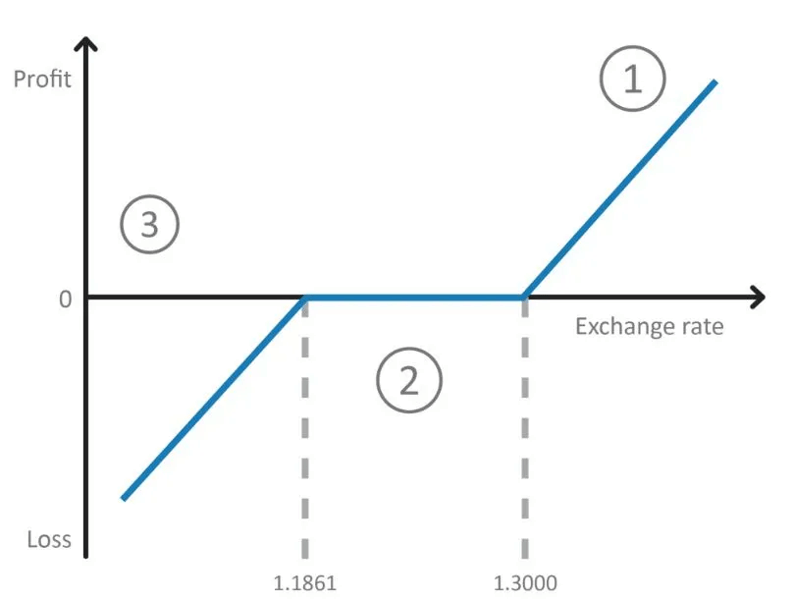
FX collar graph showing three potential outcomes over time.
Chatham publishes semi-bond and monthly money swap rates, as well as U.S. treasury rates, LIBOR, SOFR, and other rates.
Want to learn more?
Contact our team to discuss how Chatham can help with your treasury and risk management needs.
Contact usDisclaimers
Chatham Hedging Advisors, LLC (CHA) is a subsidiary of Chatham Financial Corp. and provides hedge advisory, accounting and execution services related to swap transactions in the United States. CHA is registered with the Commodity Futures Trading Commission (CFTC) as a commodity trading advisor and is a member of the National Futures Association (NFA). For further information, please visit cf.com/legal-notices.
Transactions in over-the-counter derivatives have significant risks, including, but not limited to, substantial risk of loss. You should consult your own business, legal, tax and accounting advisers with respect to proposed swap transaction and you should refrain from entering into any swap transaction unless you fully understand the terms and risks of the transaction, including the potential risk of loss. Chatham only provides services to Qualified Eligible Persons (QEP) under CFTC Regulation 4.7. All rights reserved.